Types of Off-Road Vehicles Insurance
1. Liability Coverage
If you are found to be at fault in ATV accident, liability coverage will protect you. There are two kinds of liability coverage — property damage liability and bodily injury liability.
Property damage provides coverage for damage caused on someone else’s property while you are using your ATV. It also offers you legal protection if someone files a lawsuit against you. Damage liability usually has a claim limit on it for each incident or damage occurrence. This limit usually is equal to or lower than the limit for a bodily injury claim limit.
Bodily injury coverage protects you if you hurt or kill another person while you are using your ATV and also provides you with legal defense if someone else involved in the accident files a lawsuit.
This is the kind of coverage that most states require if you’re going to drive your ATV in public places such as state parks. You might want to carry this kind of liability coverage even if you only drive on your private property. If someone uses your ATV without your permission or supervision and they are in an accident or injured, you might be held liable for the injuries they have suffered.
2. Collision (Optional)
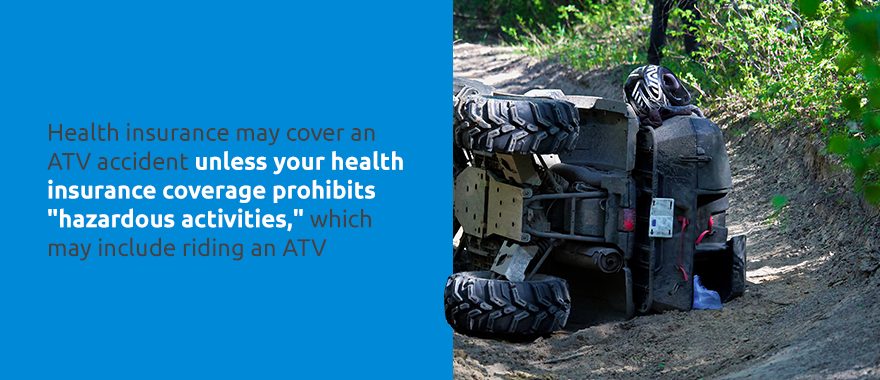
If your ATV runs into another vehicle or if it overturns while you are driving in a particularly nasty piece of terrain, this coverage will help repair your vehicle. The amount you will pay depends on what you choose as a deductible — the amount you pay before your insurance company pays the rest.
Owners of older ATVs may choose not to carry this coverage because it will help keep their overall premiums low. If you have a newer model ATV, then you will most definitely want to carry collision. So before you choose a collision policy, it is important to determine how much your ATV is worth.
If you are leasing or financing your ATV, you will often need to carry collision coverage.
3. Comprehensive (Optional)
Comprehensive is another optional form of coverage. It covers issues besides collisions and protects against vandalism, flooding, theft, fire, earthquake and other risks. It also has a deductible. ATV owners may or may not want to carry comprehensive depending on the age of their vehicle, how often they use it and how likely the covered incidents are to occur.
4. Uninsured/Underinsured Motorist (Optional)
If you or someone who has permission to use your ATV are in an accident with another individual who either lacks insurance or lacks appropriate coverage, an uninsured/underinsured motorist policy covers your expenses. In most cases, if someone else causes an accident, their insurance will cover any costs associated with the incident. There are times, however, that the other driver still will not have purchased coverage. This issue may occur even when state law requires that ATV drivers have insurance. There are per individual and per accident limits to this form of coverage, as with bodily injury coverage.
Contact Us